Berlin Panorama
The OMAM pendant, OMAM occasional table, and OMAM vase make up this collection which is all about capturing the MOVEMENT of rhythmic objects. As the glass bends and folds, it creates fascinating optical distortions; the pendant lights play with this effect, bending and REFRACTING LIGHT in various ways. The vases and occasional tables, on the other hand, absorb and reflect the surrounding space.
The OMAM series is designed by Philipp Weber. The collection reflects the natural movements of the HUMAN BODY to create sculptural pieces. This innovative collection transforms traditional glassblowing into objects that imitate human motion mirroring the FLUID MOVEMENTS of the maker.
Throughout the „OF MOVEMENT AND MATERIAL“ series, forms curve and twist, creating beautiful light patterns that scatter throughout the sinuous frame. This collection suggests the relationship between the maker and their material, and the role of CRAFTSMANSHIP in our increasingly digital world.
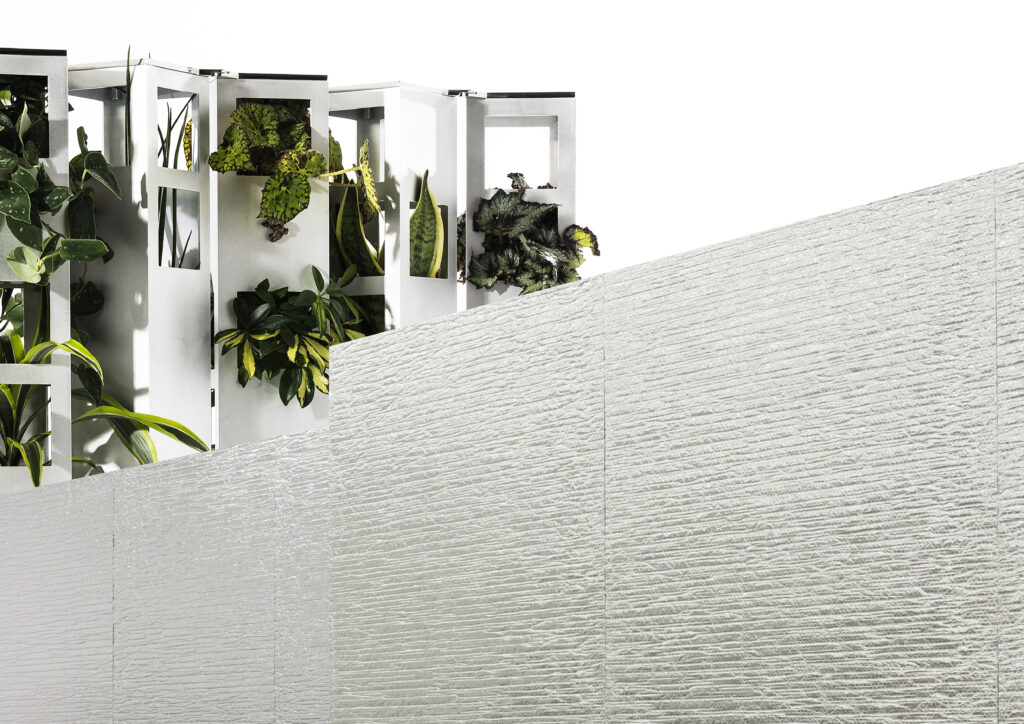
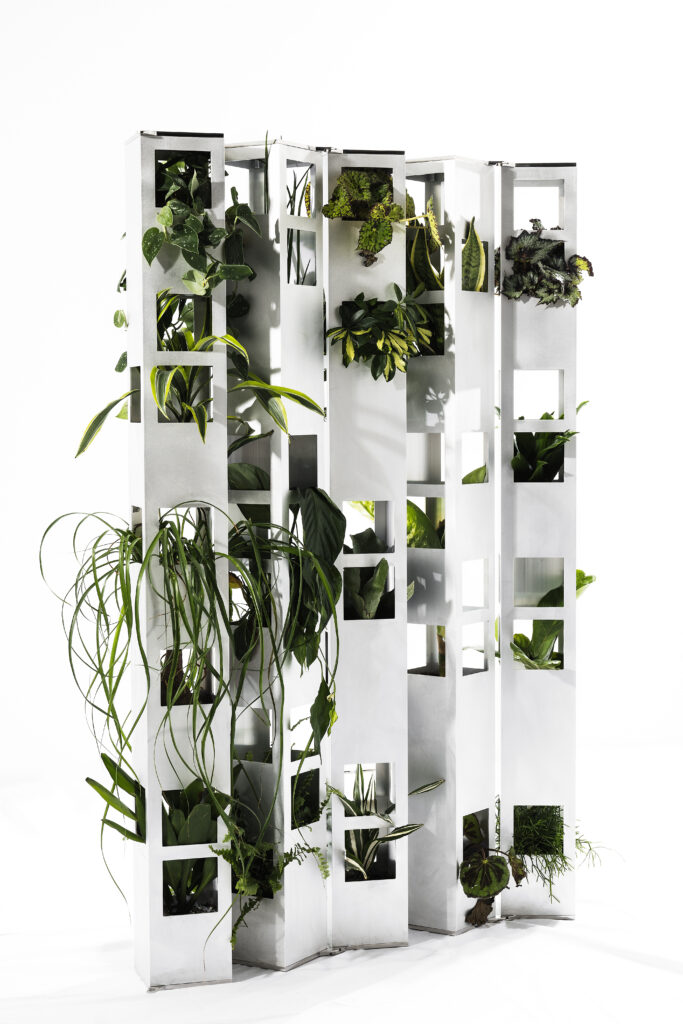
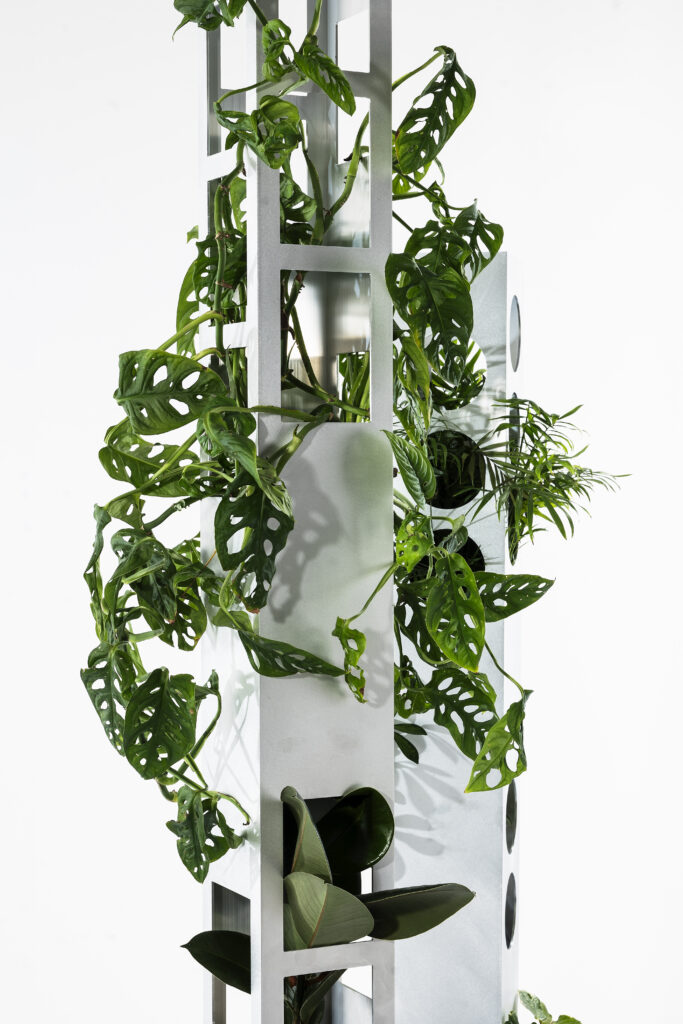
Tower plant paravent
polished stainless steel frame and aluminum square tubes
“Dry garden & wet movables” focuses on some contradictions of urban living, exploring the evolving role of architecture in contemporary society. Every element of the installation reacts to its surrounding, urging visitors to engage. This interaction continually shapes the scenery of light blue paper confetti, wrapped around high rise aluminium towers like urban canyons. With reaction as a central element, the design emerges from purely aesthetic to performative, offering critical commentary on current social conditions. The aluminium towers are inhabited by plants which are sprouting from the different shaped windows. The juxtaposition of these norm-core plants, commonly found in everyday households, like different inhabitants, reveals a new vision, turning the mundane into something poetic.
All objects, up to the benches that extend in modular sequences, are originating from the same industrial semi-finished product – a 150 x 150 mm aluminium square tube. Small interventions elevate the objects to collectible quality: finishes like high polished, sand blasted, hand marked or covered with natural leather and high polished stainless steel additions. Specially manufactured red Lola lights and 400 kg of recycled paper confetti, kept in motion by large fans, are creating the sound- and landscape of the installation.
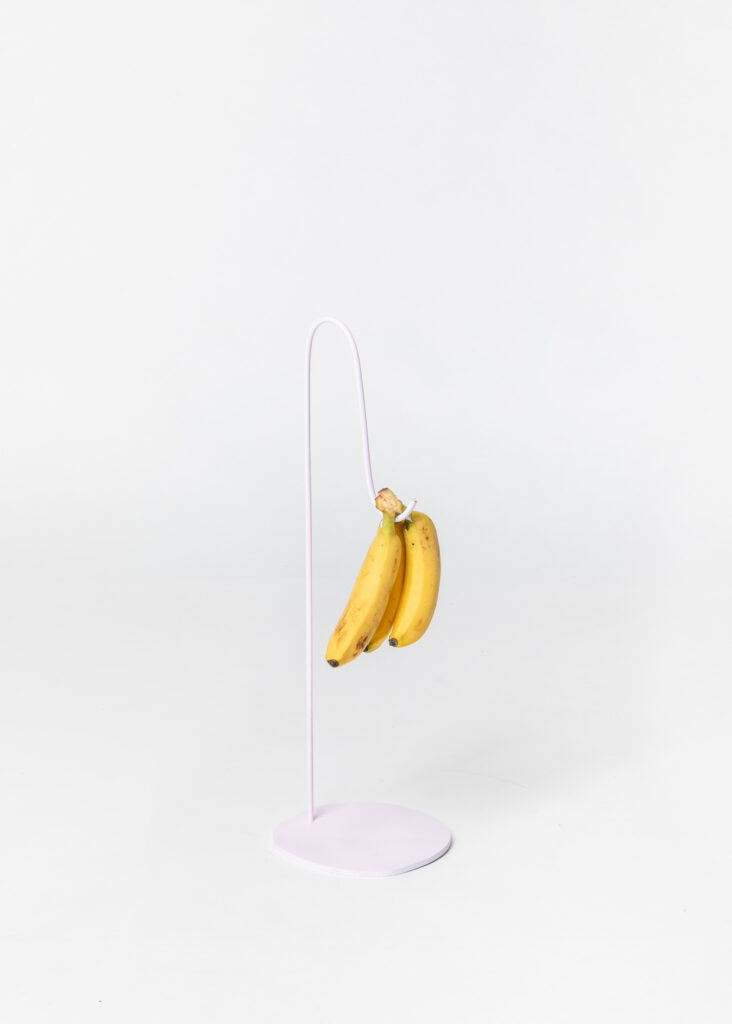
Banana Holder
© Stephan Boegel
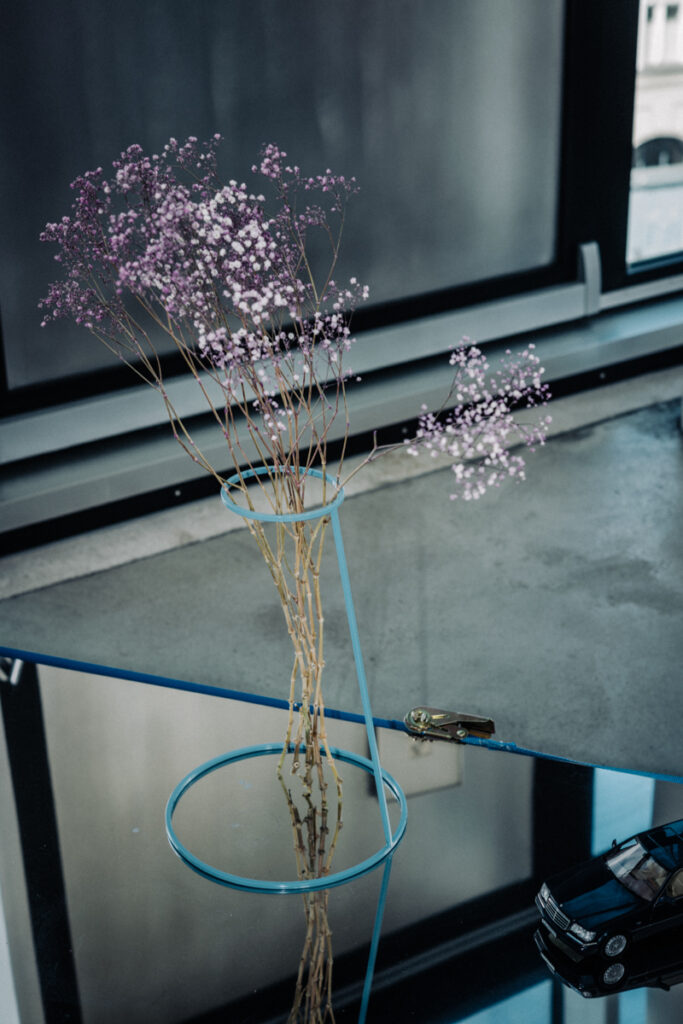
Flower Stand
© Oliver Helbig
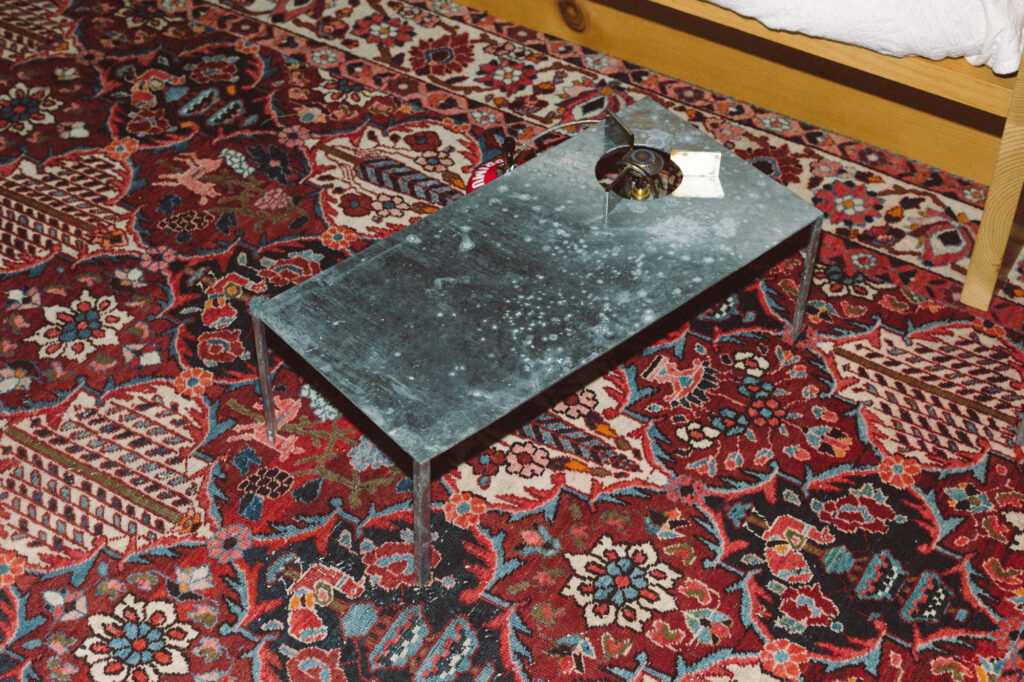
Tiny Stove Table
© Oliver Helbig
Sam Chermayeff Office’s work believes that architecture can make things happen and that things can happen to architecture.
With offices based in Berlin and New York, both studios work on wide range of projects including multiunit housing buildings, institutional buildings, exhibitions and furniture. Our clients include the Albanian state, FLOS, many private individuals, Knoll, Maharam, several building groups and we appreciate this diversity.
Sam Chermayeff Office is made of two partners, Sam Chermayeff and Barbara Polakova and a multidisciplinary team of architects and designers. The office has an extended interest in how we live alone and together.
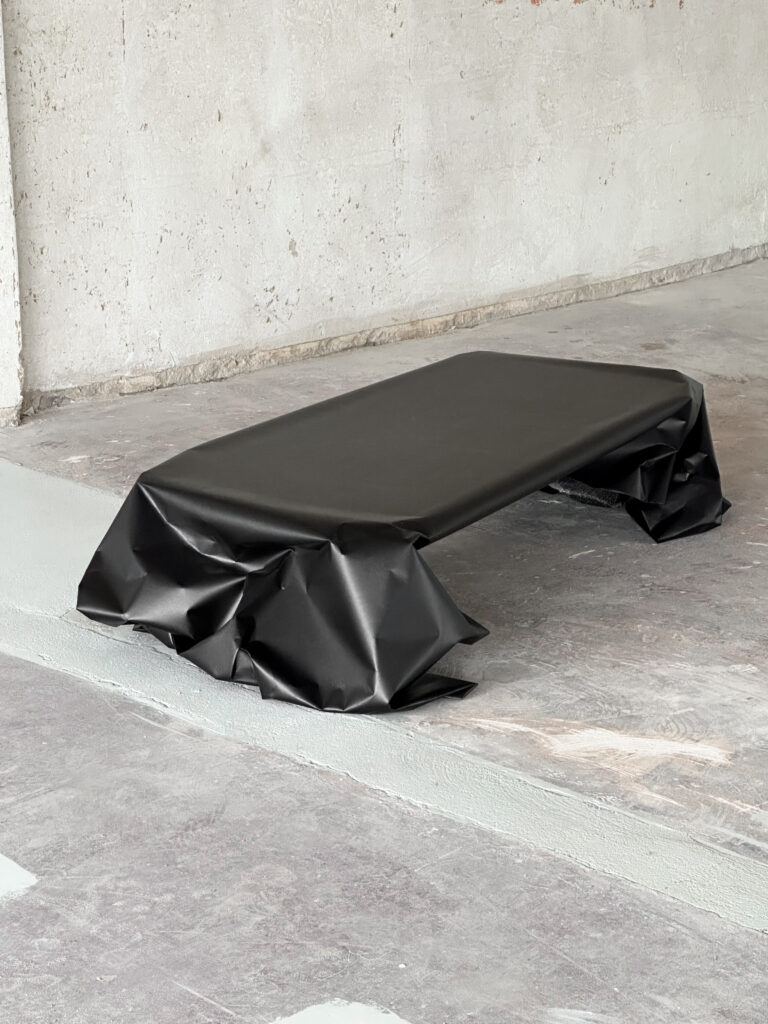
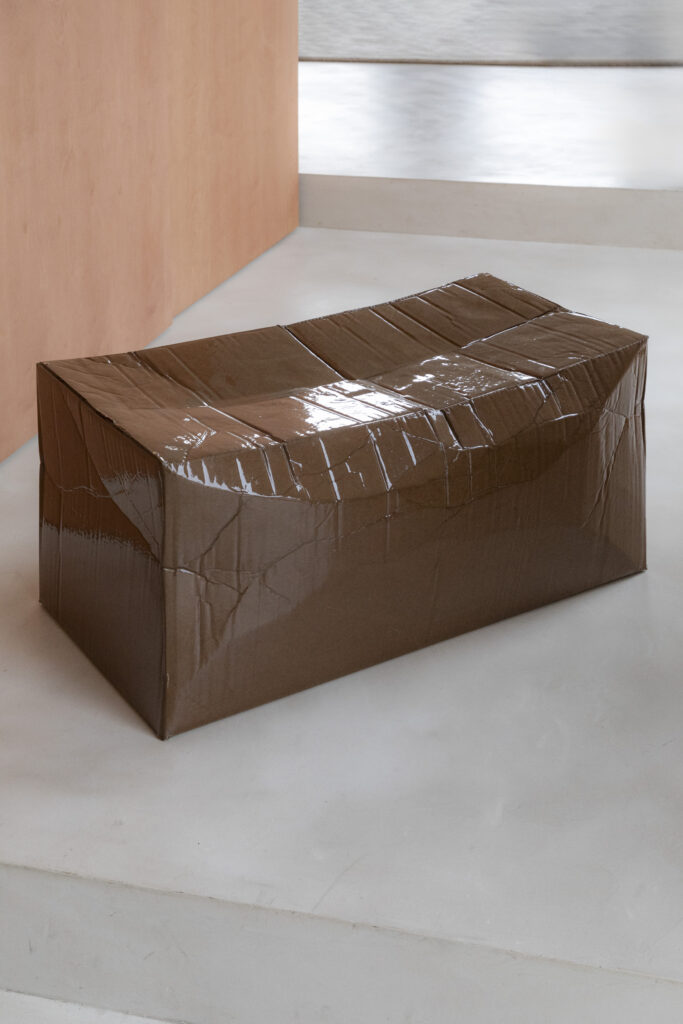
Paper Table
TableDouble stool
Courtesy of Vasto Gallery
Illya Goldman Gubin is a Ukrainian multi-disciplinary artist based in Berlin, with strong ties to fashion and conceptual art. The artist’s work is a testament to his dedication to authenticity and creative exploration, as he embraces the beauty of imperfection, preserves the essence of the medium and carries an ongoing dialogue between past and present, evoking a contemplative meditation on the relationship between function, form and beauty.
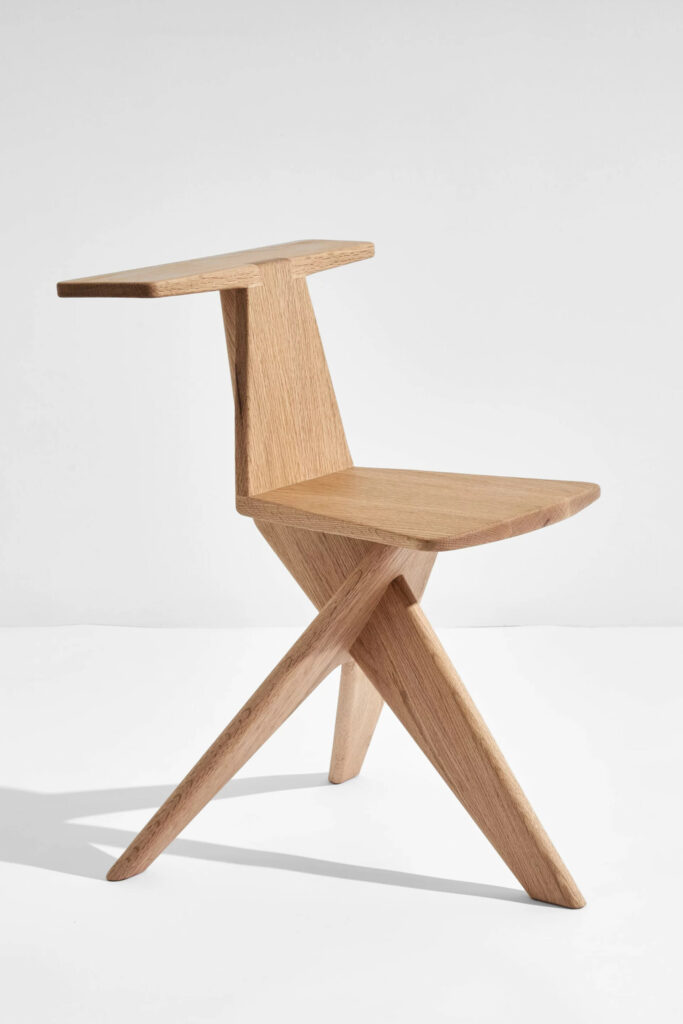
Migo (natürliche Roteiche)
© Jason Yates
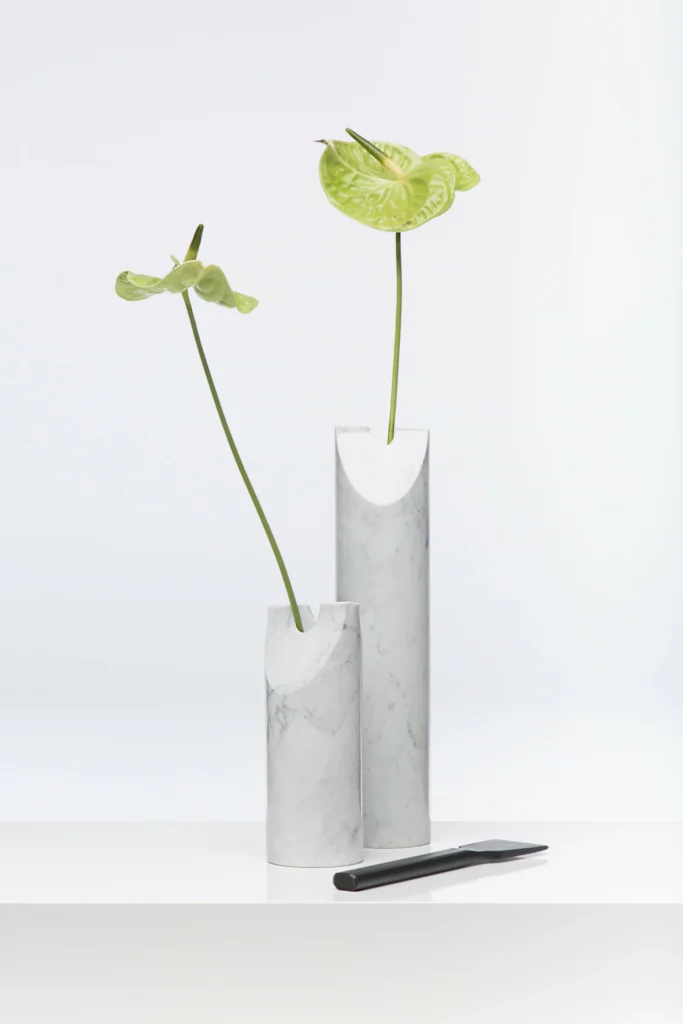
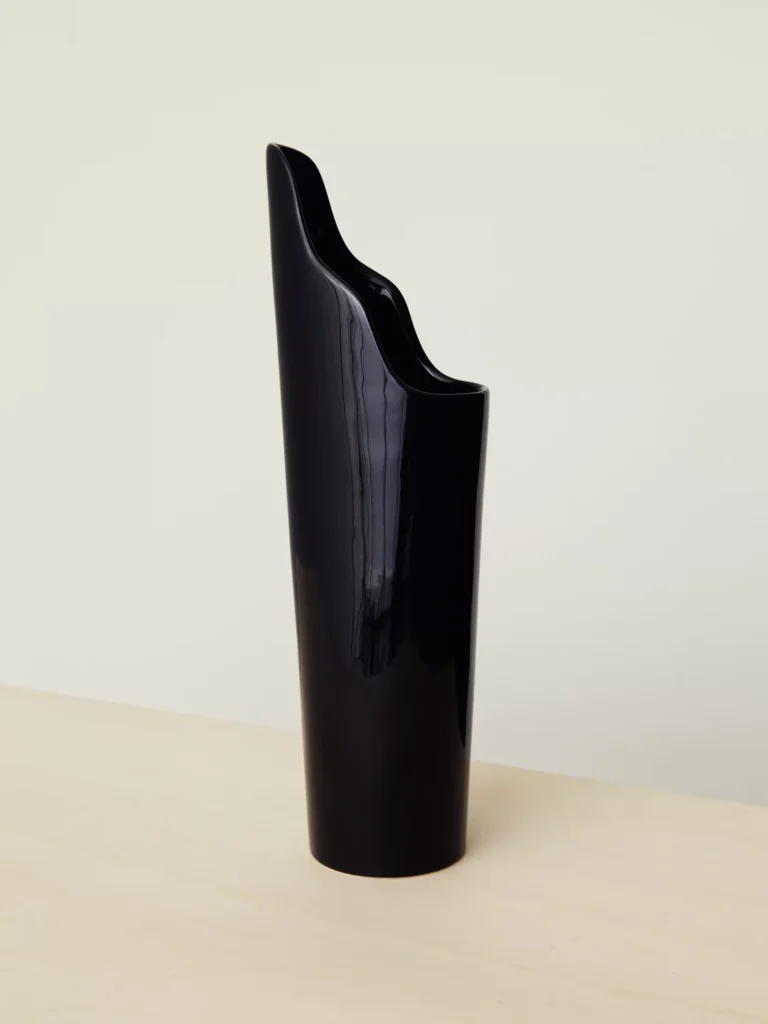
Division (vase)
© Marco Zanin
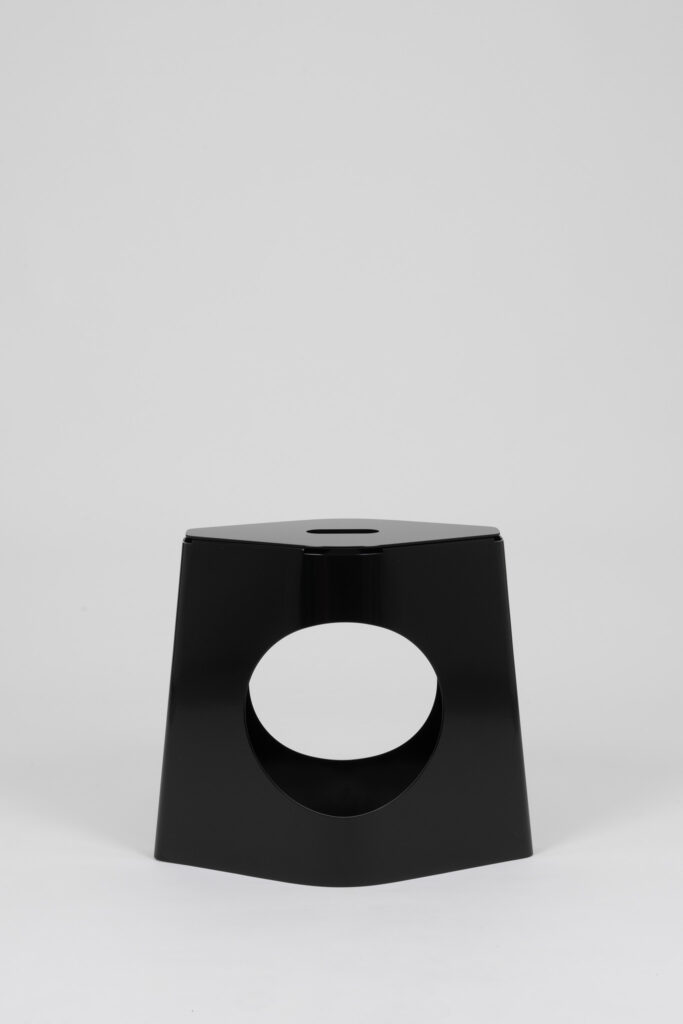
TECTA Prism
© Studio für Gestaltung
CASCADE
© Dennis Wernersson
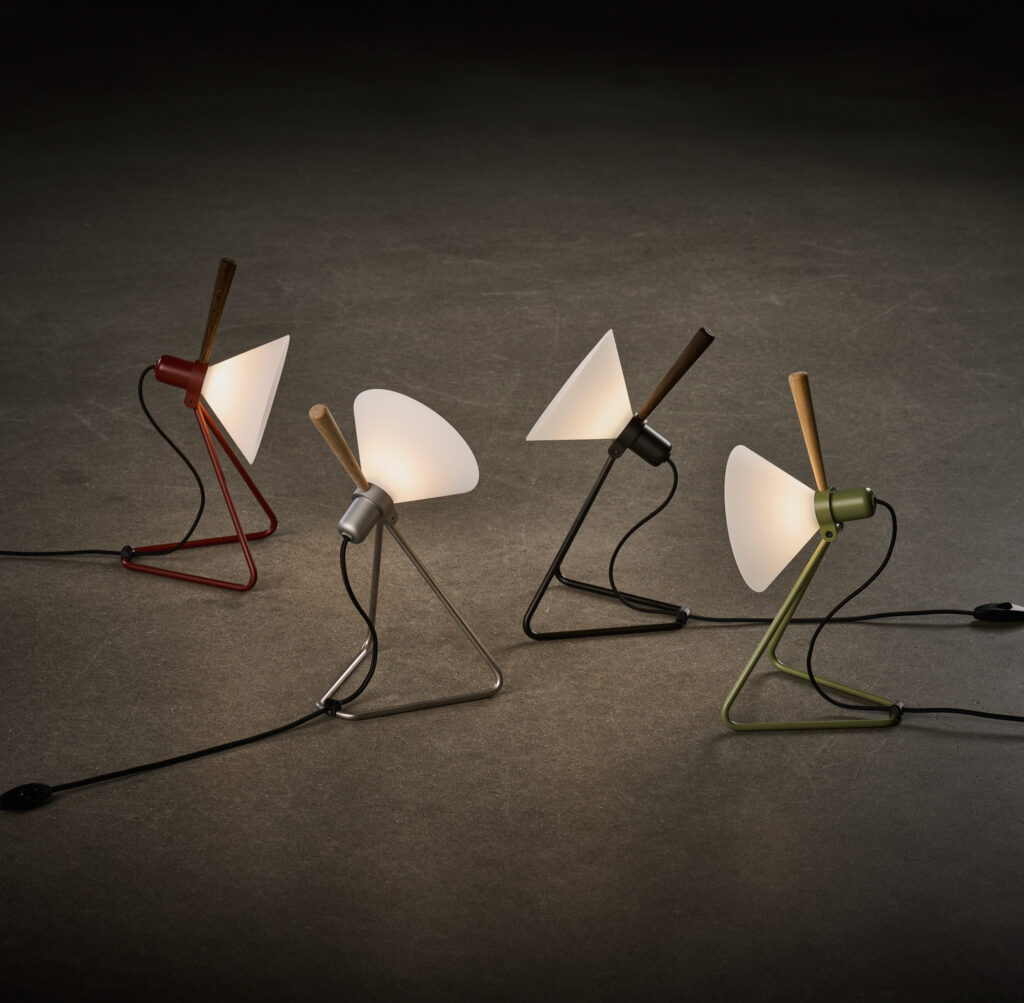
LeKlint SPOT
© Le Klint
MIGO for Benchmark
Migo is the result of personal reflections during a time of change and uncertainty, the start of the Covid pandemic. It serves as an adapter for the various tasks to perform during the day, whether it being a place to sit, perch or used as a side table. You can use it in various ways, there is no front or back, no right or wrong. Ultimately it’s a companion or a friendly little helper. Made in the workshop of BENCHMARK out of red oak to provide strength, it can be cut from a single plank of wood for optimal grain consistency and minimized wastage.
DIVISION VASE
DIVISION is a polished marble cylinder made to be broken. A collision of control and chaos. This marble cylinder only becomes functional and unique through a controlled stroke. Striking the middle with a steel chisel breaks the cylinder into two pieces, forming two vases. The act of destruction, to be done by its user, reveals the dual qualities of marble, both sharp and smooth.
PRISM for Tecta
A nod to Prouvé with a strong graphic gesture: the Prism stool diffuses light and creates possibilities. Modularity meets combinability. The initial idea for this object comes from my background in the office world. That cosmos in which flexible spaces are needed, where workshops and meetings take place, sometimes with five, but also with 50 people. This stool offers a quick seating option, providing a space underneath to house a bag, jacket or any personal belongings. It stacks and can retract into a corner when not needed anymore. Made of 3 mm bent aluminum sheets, the concept took an amusing turn as Tecta is a cat family – and the Tecta Cat immediately moved into the stool. Why not?
SPOT for Le Klint
SPOT stands out with its simple and durable materials, leaving nothing hidden. The lamp’s tiltable head with a handle gives it a distinctive character with a useful function. SPOT can be placed on a table or on the floor, but it can also be used as a wall lamp, as an extra hook for SPOT is included. The idea was to create a lamp that can be carried around the home. The soft wooden handle underscores this function. It is a result of my personal experiences, where I have travelled extensively and lived in several countries and cities, which has made me only bring the most essential things with me. But the primary inspiration is my love for espresso machines (handle) and bicycle components (clamp + metal wire) in the design, emphasizing the lamp’s agile and portable nature.
The core idea of the design is to elevate the light source from the floor to a preferred height using simple materials. A metal rod forms the lamp’s base, while an aluminium clamp connects all components with a single screw and an Allen key. By not using batteries but instead employing a traditional cable, the lamp has a longer lifespan. The lampshade, made of durable plastic, is resistant to accidental drops. Furthermore, all components of SPOT can be replaced or repaired.
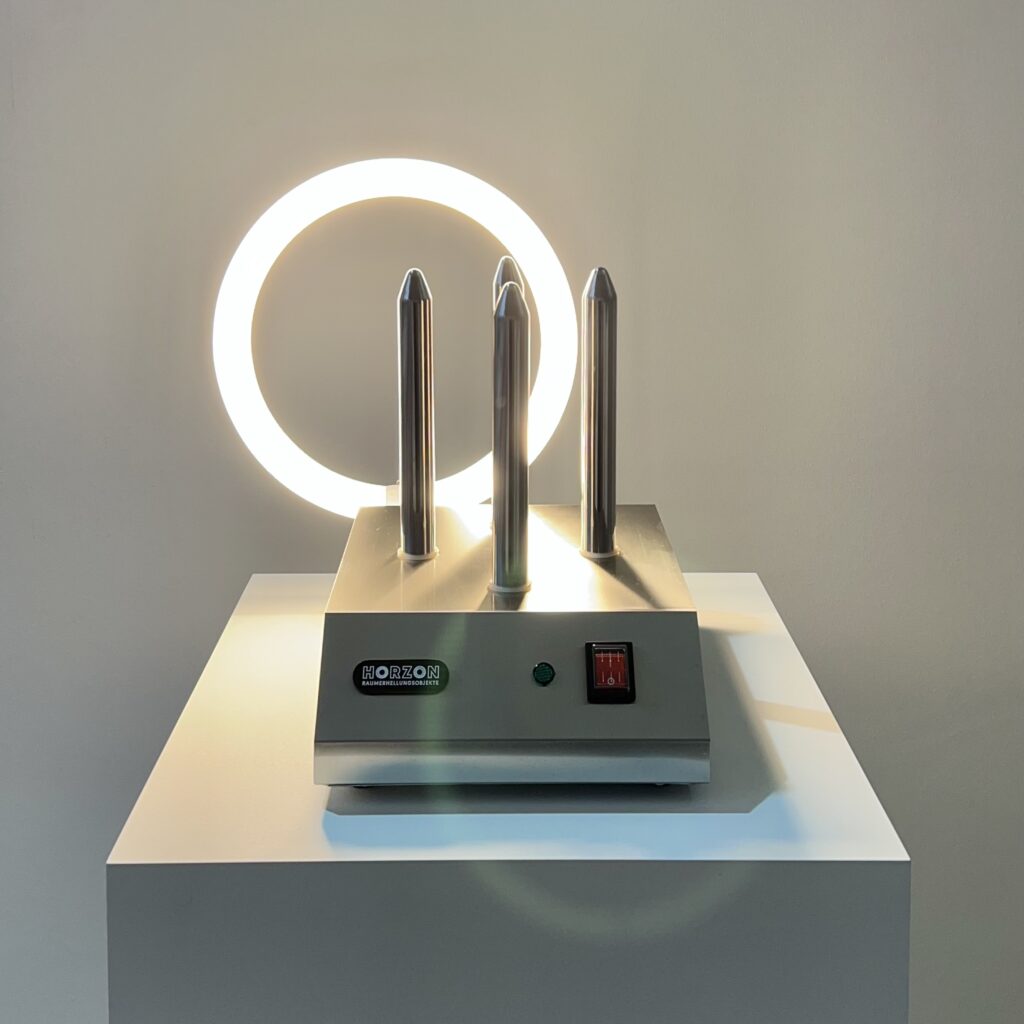
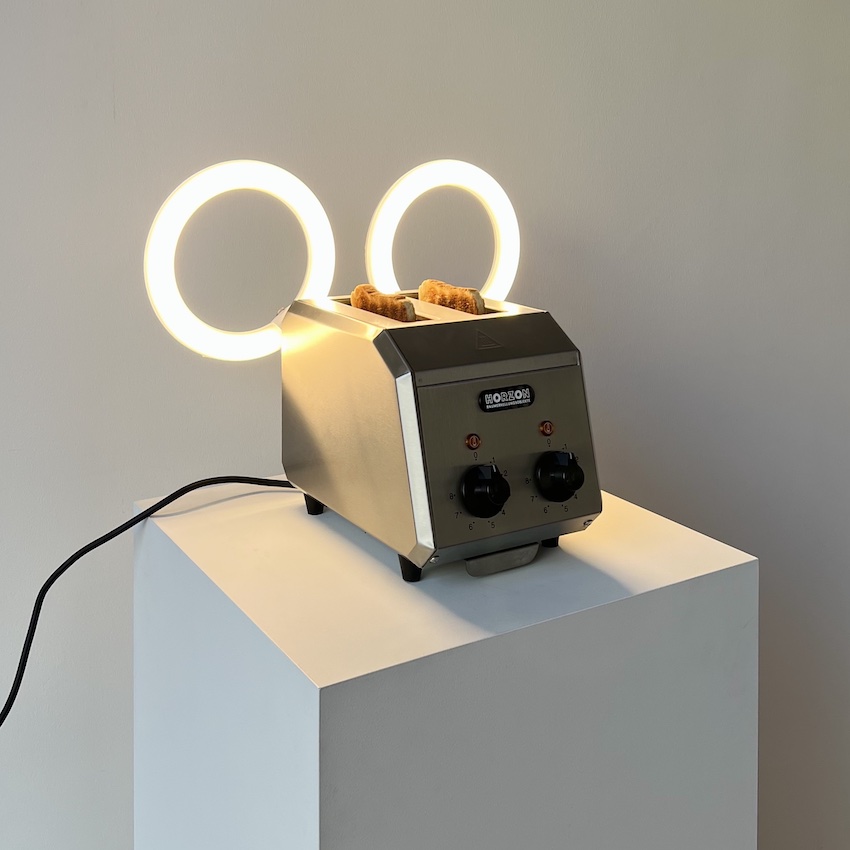
Raumerhellungsobjekt mit integriertem
Hotdog-Brötchen-Erwärmer
Raumerhellungsobjekt 001 mit integriertem Toaster
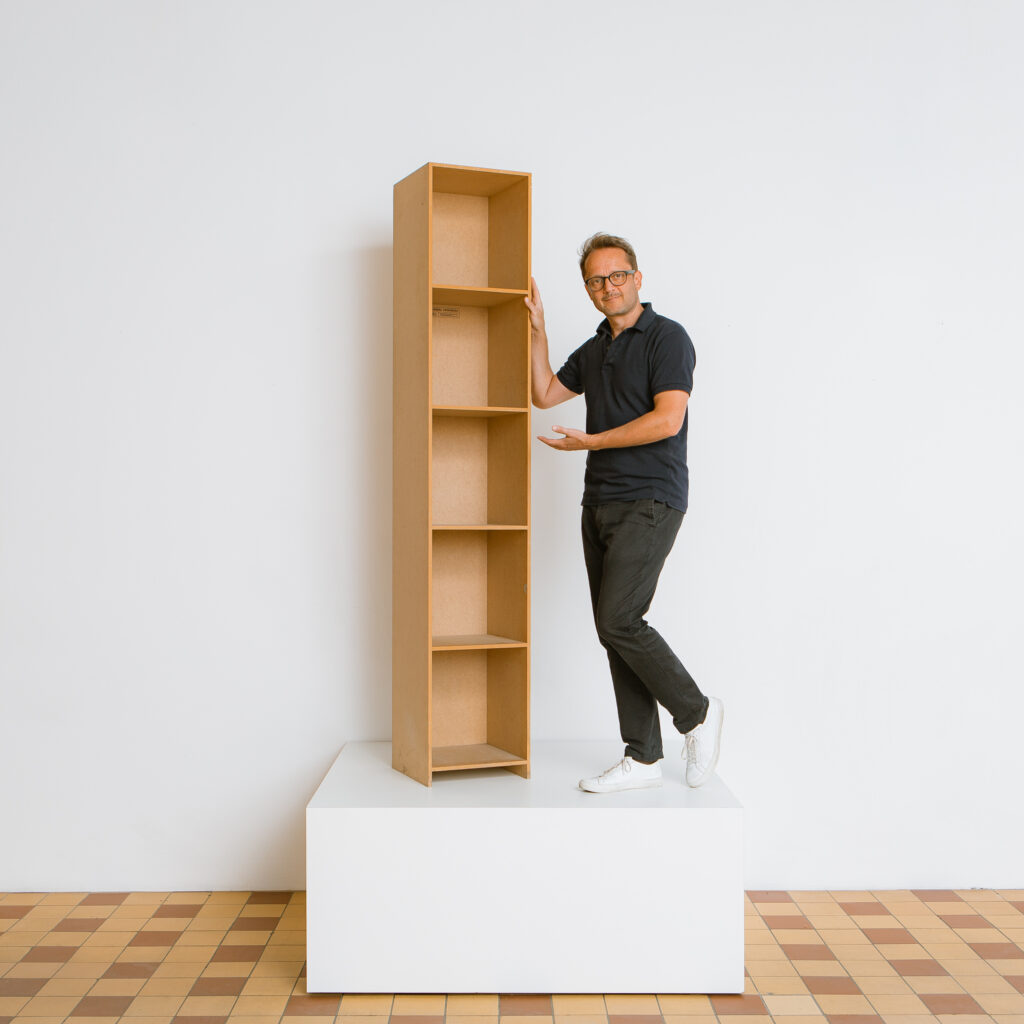
Erstes Regal aus der Linie
Rafael Horzon studied comparative literature, philosophy, and atomic physics in Paris, Munich, and Berlin. After abandoning his studies, he trained as a parcel delivery driver for Deutsche Post in 1996. He then founded numerous companies and organisations, including the Wissenschaftsakademie Berlin (Berlin Academy of Sciences), the Deutsche Zentrum für Dokumentarfotografie (German Centre for Documentary Photography), and most recently, the Deutsche Design Museum (German Design Museum). He is the author of several books, and his autobiographical bestseller Das Weisse Buch (The White Book) has been translated into numerous languages. Rafael Horzon lives and works in Berlin.
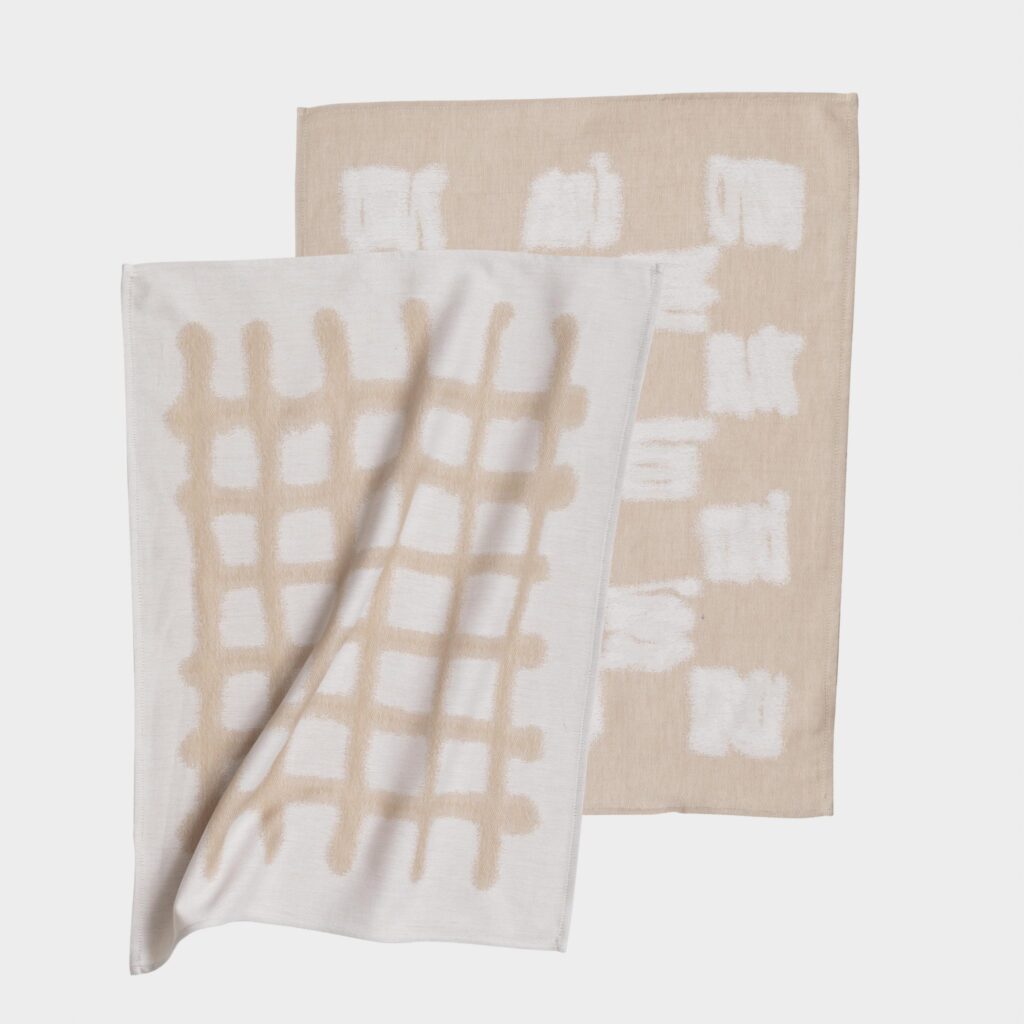
Spray kitchen towels
TEUBER KOHLHOFF is a textile and interior design studio founded by Anna Teuber and Franzi Kohlhoff 2015 in Berlin.
The studio’s commissions range from print and pattern design to woven or knitted interior products and spatial installations. With a keen interest in establishing a lively dialogue between archetype and experimentation, the studio creates strong narratives and standout projects. A profound knowledge of materials and manufacturing processes enable conscious design decisions, as well as a sensitive use of production facilities. Aiming for individual solutions and the utmost standards, the studio works in close collaboration with high-quality weaving and knitting mills, and a trusted network of manufactories and architects in Germany and across Europe.
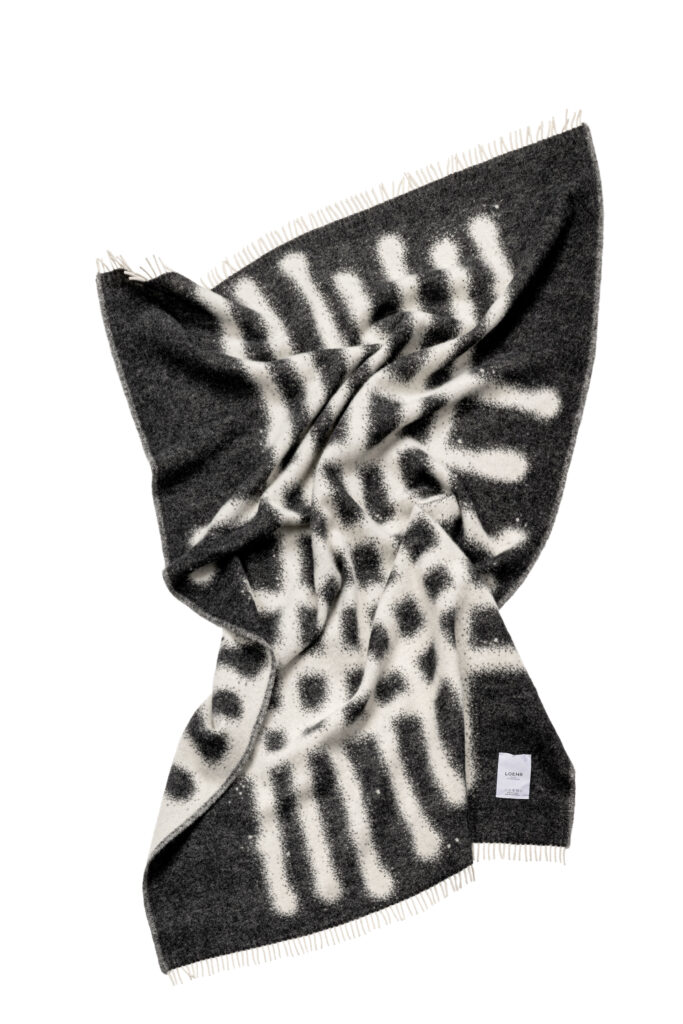
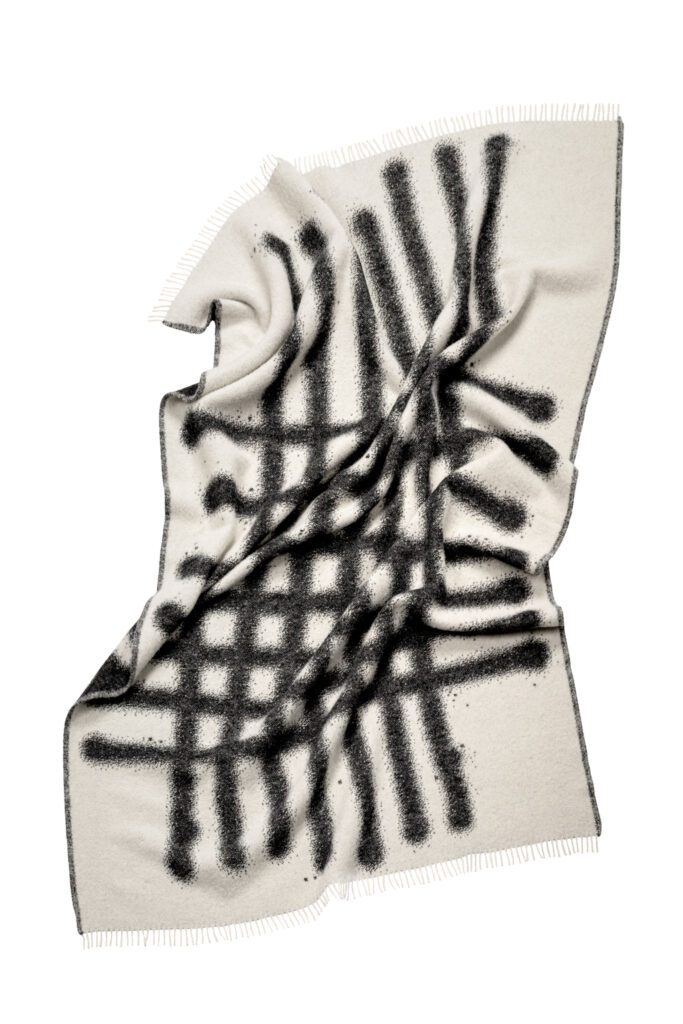
LOEHR is a label of furniture and objects from Berlin, Germany. Founded by three brothers, David, Leon and Julian, it is a brand built upon the values of kinship. The product collection, informed by architectural categories and methods, develops with the intent to create uncompromising and better spaces for living, working and being.
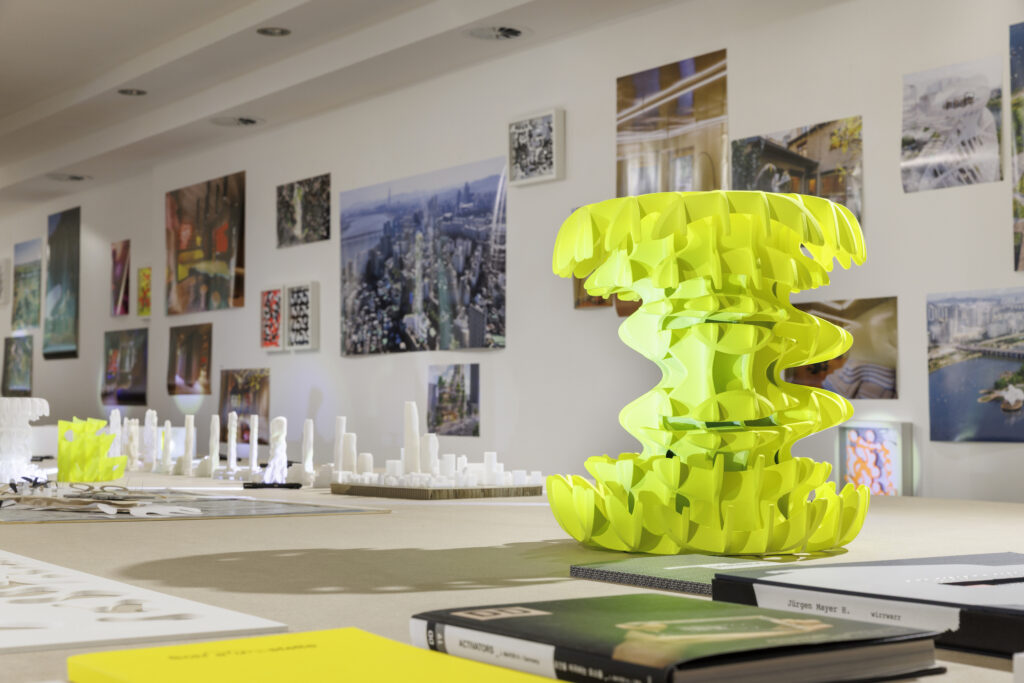
Torsolo, Hocker, neongelb, limited Edition
Höhe ca. 40cm, Acryl, lackiert
Credits: J. MAYER H. ( J. MAYER H. und Partner, Arch. mbB ), 2025
Photo: Frank Sperling, 2025
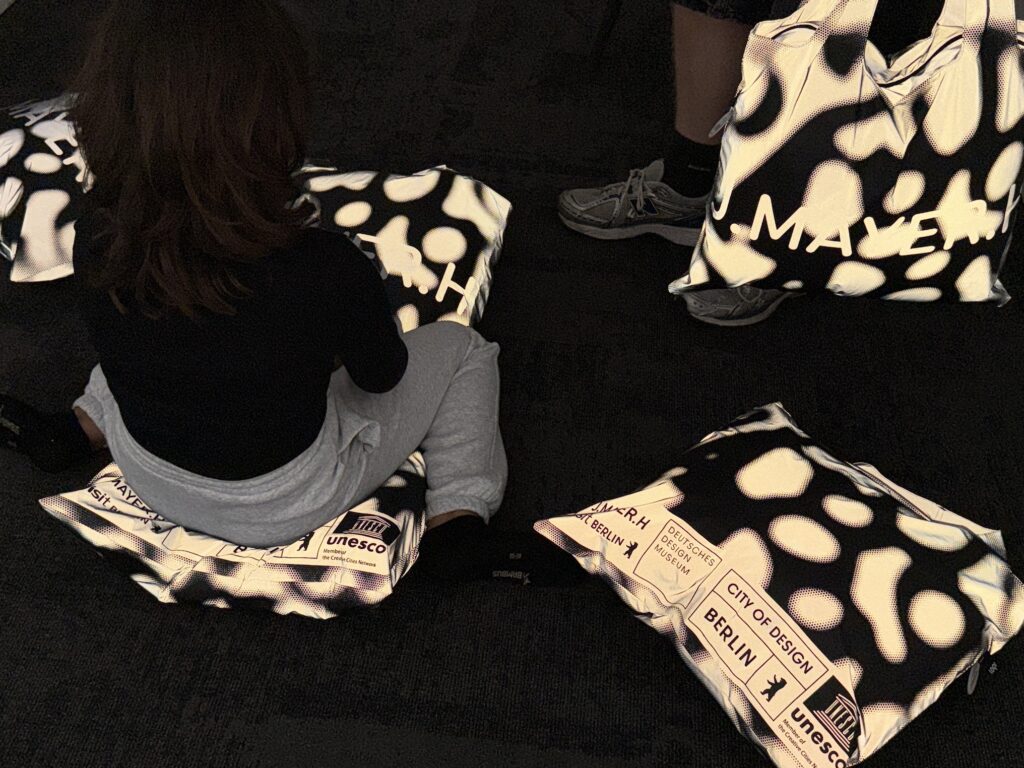
Taschen.Kissen
Bag, Reflektorstoff, Print
Credit: J. MAYER H. ( J. MAYER H. und Partner, Arch. mbB ), 2025
Photo: J. MAYER H. und Partner, Arch. mbB, 2025
Frank Oehring lives and works as an artist in Berlin. In his Kreuzberg studio, he creates a wide range of works for public spaces, including large-scale colored wall reliefs, light objects, and freestanding sculptures for both public and private settings.
After studying painting in the 1960s at the University of the Arts in Berlin, Frank Oehring developed complex neon sculptures and, in the 1970s, created the information and wayfinding system as well as the 10-meter-high Grosse Lichtplastik (Large Light Sculpture) for the International Congress Center (ICC) in Berlin.
These early works were documented in the ZDF-produced film Neon Licht Kunst – Objects That Glow, alongside artists Stefan Antonakis, Cork Macheschi, Bruce Nauman, and Frank Oehring as the only European artist featured. Since the 1990s, Oehring has been creating space objects made of aluminum, color field sculptures, and reliefs made from spherical surfaces and strips. These works are painted like canvases, with pulsating color fields that seem to glow with depth depending on the changing light.
These abstract color-light-sound compositions continuously transform with the shifting daylight. Exhibitions include: Modus Berlin, Glyptothek Munich, Retrospective at the Berliner Festspielgalerie, Academy of the Arts Berlin, DAAD Gallery Berlin, Aedes West Berlin, Extension Pavilion of the Aedes Gallery Berlin, Brandenburgisches Landesmuseum für moderne Kunst, Kunstgewerbemuseum of the State Museums in Berlin.
His works are held in private collections.
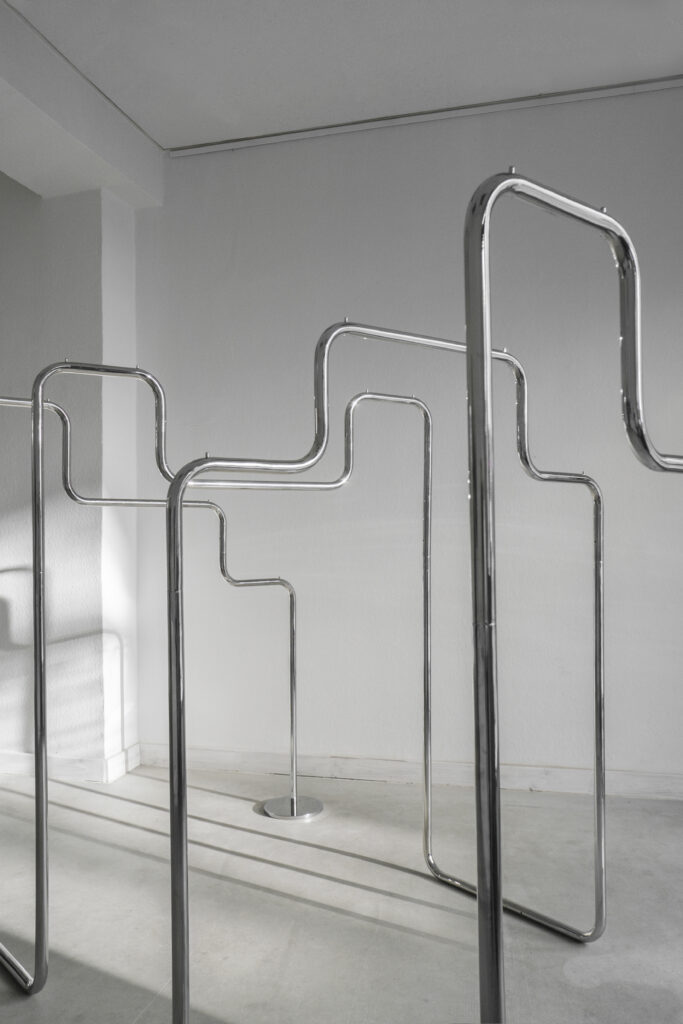
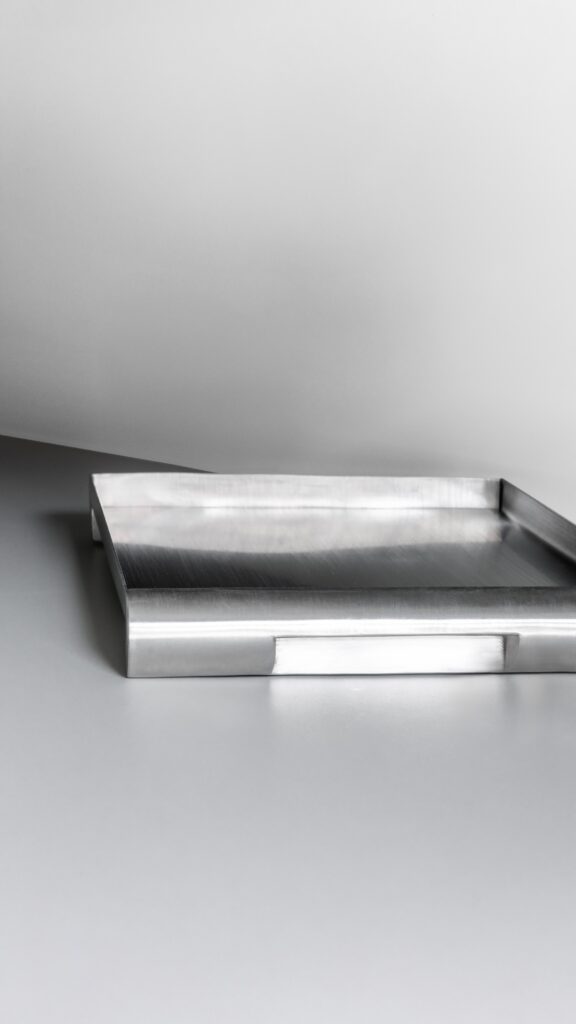
Flow
Pale Tray
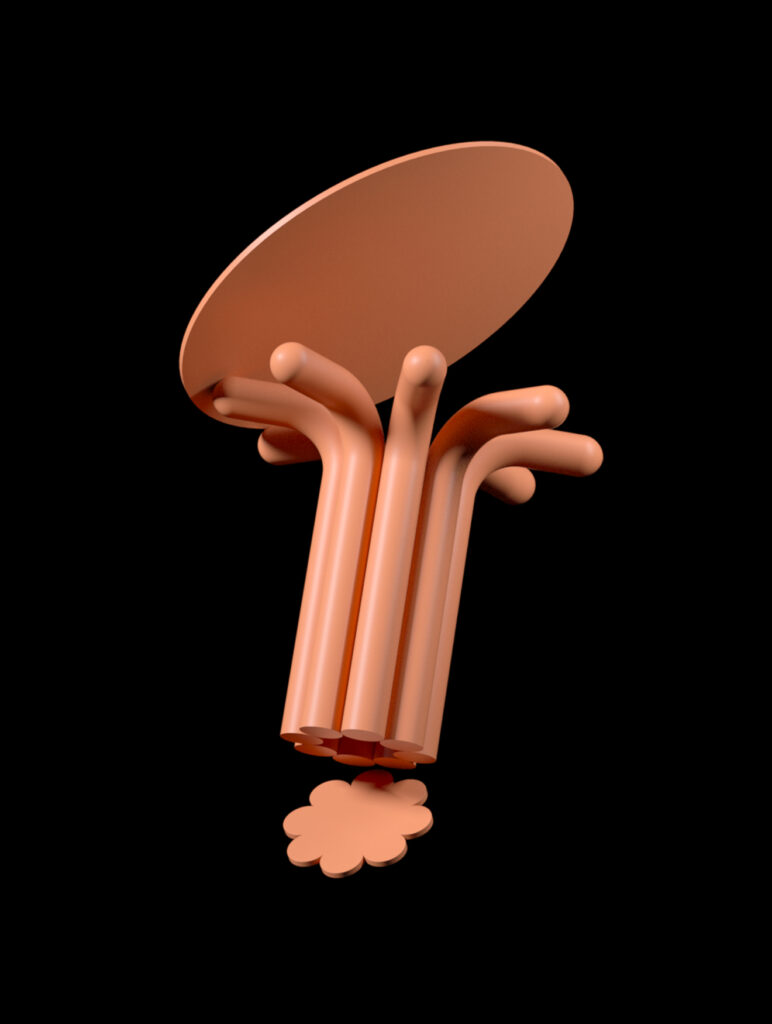
Beads
Flow is a tubular steel display system designed to seamlessly fit into diverse spaces—owing to its simple and modular nature. The structure blurs the line between design and art, and can double as a blank canvas for creatives. It’s a sleek and functional addition that fills the gap between creative industries: effortlessly assembled without tools, disassembled in minutes, and conveniently flat-packed for transport. Consisting of three modules, numerous configurations can be created: A simple hanging rack, a corner, a circular or linear arrangement, or a labyrinthic sequence.
Flow investigates a new Bauhaus product from today’s perspective since the cult designs have been predominantly chairs, lamps, or tables. Designed by two master’s graduates of the Bauhaus University Weimar, in a similar position to, for example, the Wilhelm Wagenfeld (Wagenfeld Lamp), the system questions: What makes a product iconic? Can we still design a classic?
Beads is a functional art piece that simultaneously exists in digital and physical realms—shuffling between the two realities and playing with the norms of value, virtuality, and transposition. The anatomy of the series is inspired by the free-swimming jellyfish and their organic movements in water. The flower-shaped connecting piece and eight legs, handmade by local craftsmen in Istanbul, create an in-motion, alluring, and characteristic look. The demountable structure allows an efficient packaging and shipping process. Beads is a follow-up series to Paleworks’ Bauhaus-inspired, modular display system Flow.
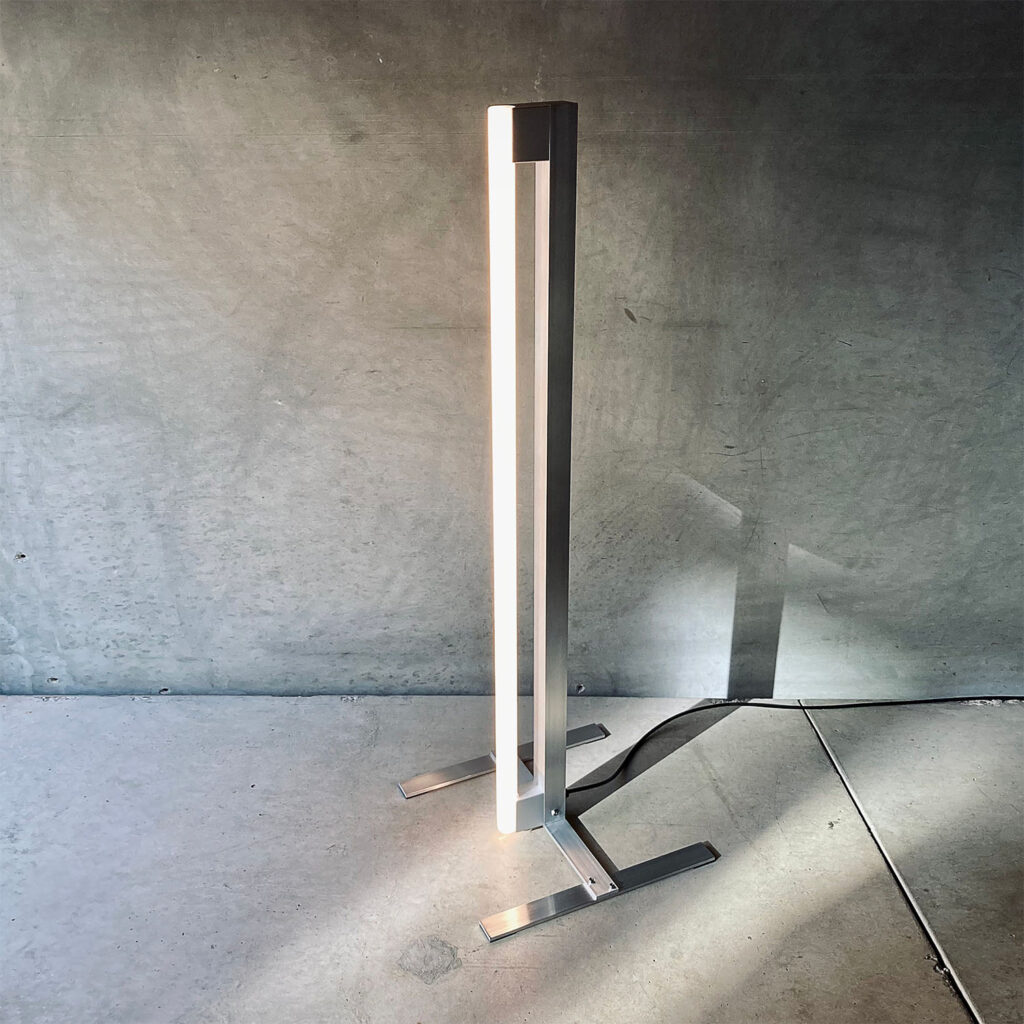
Machine Light
Machine Light designer-maker Ben Raine develops and produces raw, elegant, deconstructed lighting, inspired by Brutalism and early 20th century designers. Fabricated from exposed metal and linear LED bulbs, the result is a new, ultra-modern, minimalist industrial style. Made by hand in Berlin with extreme care and attention, embracing the imperfections of the raw materials, each light is a unique piece that is built to last. Machine Light is focused on custom builds and collaborations.
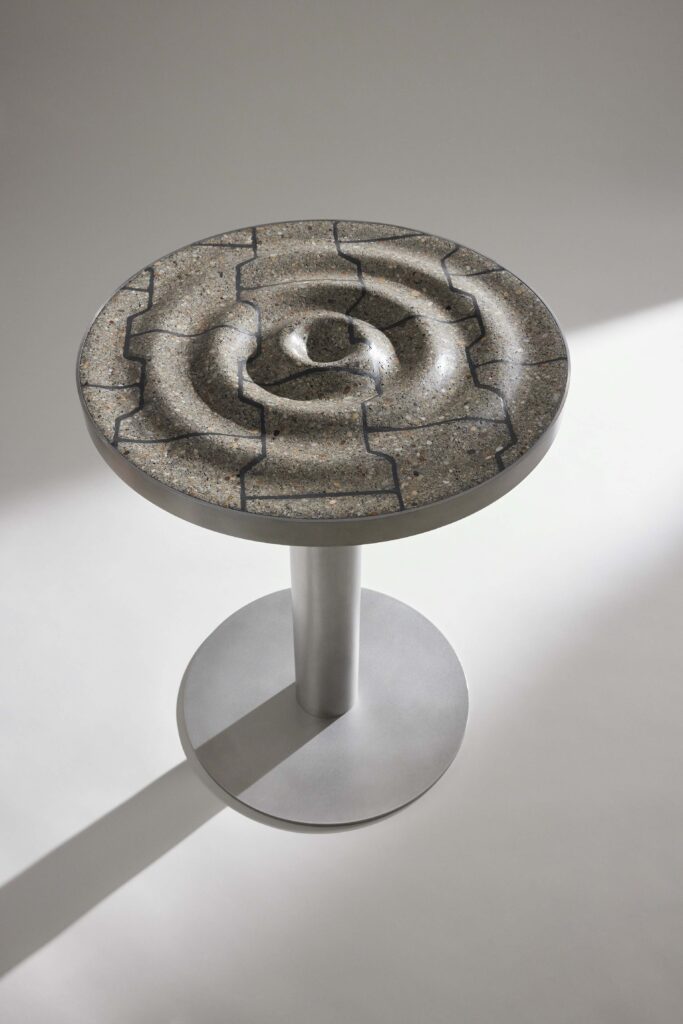
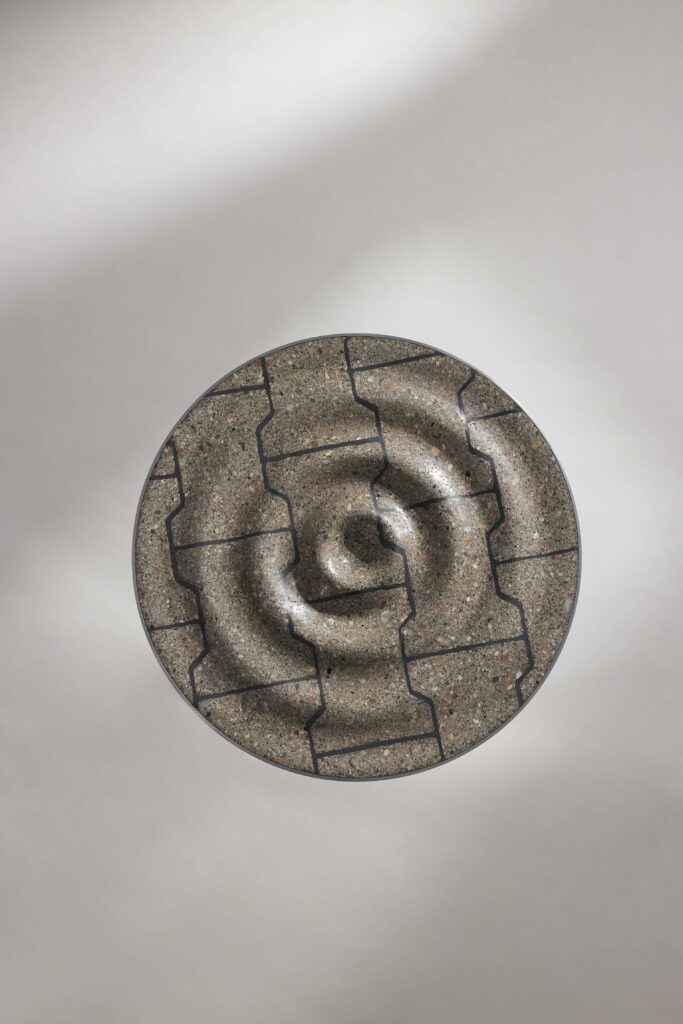
The Undercurrents No. 1
2025
Upcycled concrete paving stones, CNC cut and hand polished, brushed stainless steel
The Undercurrents objects convey the silent power and endless rhythms of water, translating the emphemeral into the physical. Captured in stone, these waves encapsulate the fleeting spectacle of a falling drop—from the smooth, mirror-like surface it disrupts to the powerful surge that gradually subsides into calm.
Each sculpture embodies layers of lived stories. Formed from used concrete paving stones with familiar, everyday patterns, they illustrate how the past can bloom anew, capturing time and movement in a single moment. Through grinding and polishing, the concrete reveals its inner layers and colors; rem- nants of constructed urban history surface as readymade terrazzo. The un- derlying aggregates shimmer, contributing to a polished “wet look” that en- hances the illusion of liveliness.
This blend of natural and urban elements creates an interplay that reflects both nature’s strength and urban structures, blurring the boundaries bet- ween the physical and the imagined. Framed and supported in a stainless steel structure, each sculpture rises and reflects sunlight. From every angle, the play of light shifts, as if sunlight flows through the waves of the object. This dynamic quality allows the viewer to experience the cool stillness of water and the gentle dance of light and shadow on its surface.
Through the integration of reused material and the representation of a natural phenomenon within an urban context, Undercurrents weaves together past and present, material and imagination, echoing The Reality of the Virtual by transforming natural concepts via digital technologies into tangible forms.
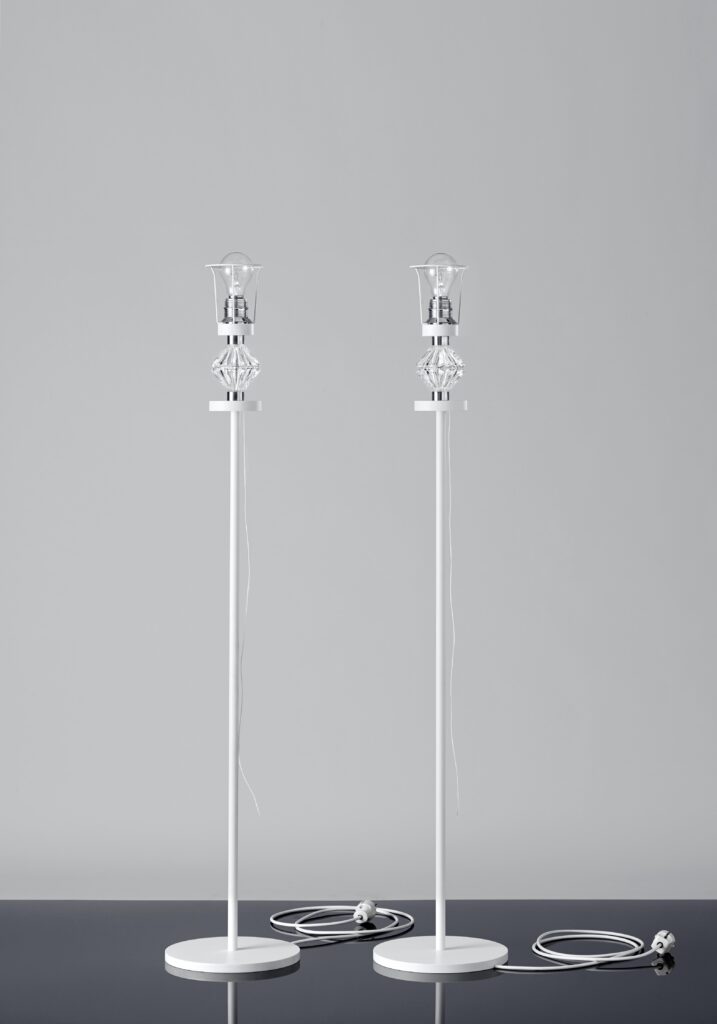
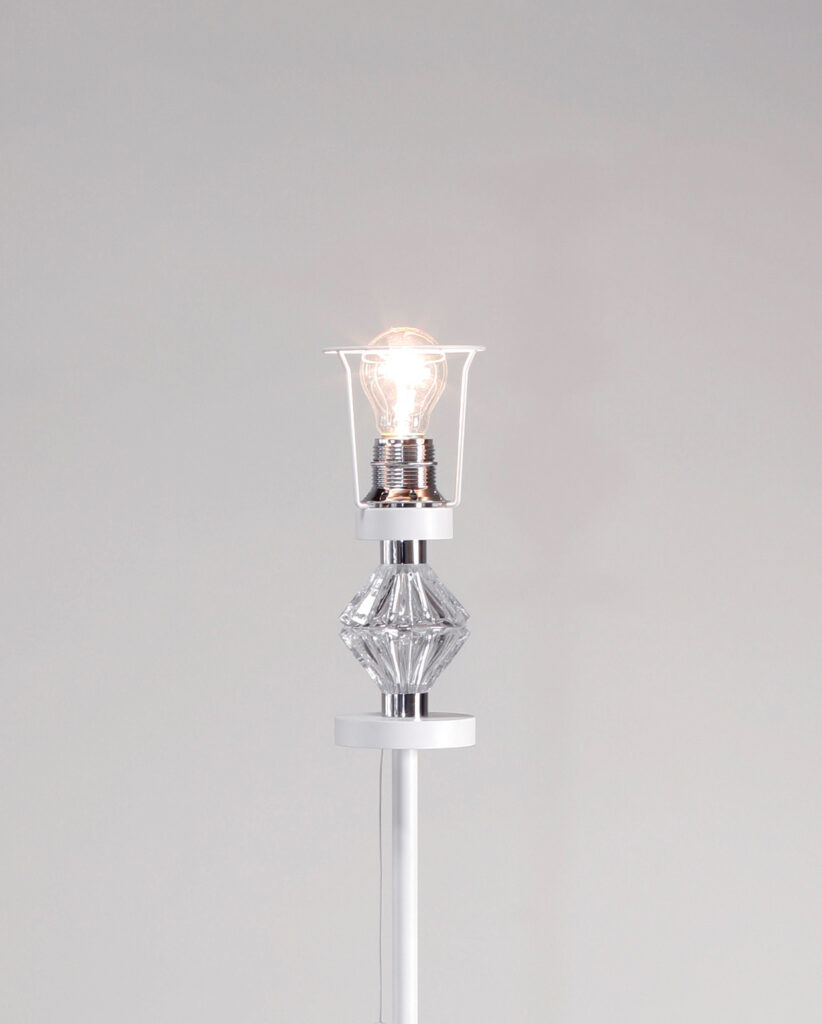
Stripped Lamp
Stripped Lamp (Detail)
Tina Roeder was born in Germany in 1975. She studied at Central Saint Martins in London, graduating with a Bachelor’s degree in 2000. Roeder went on to earn her Master’s degree from the Design Academy Eindhoven under Droog in 2004. After graduating, she trained with Studio Job in Antwerp and launched her own studio in Berlin in 2007, where she continues to live and work today.
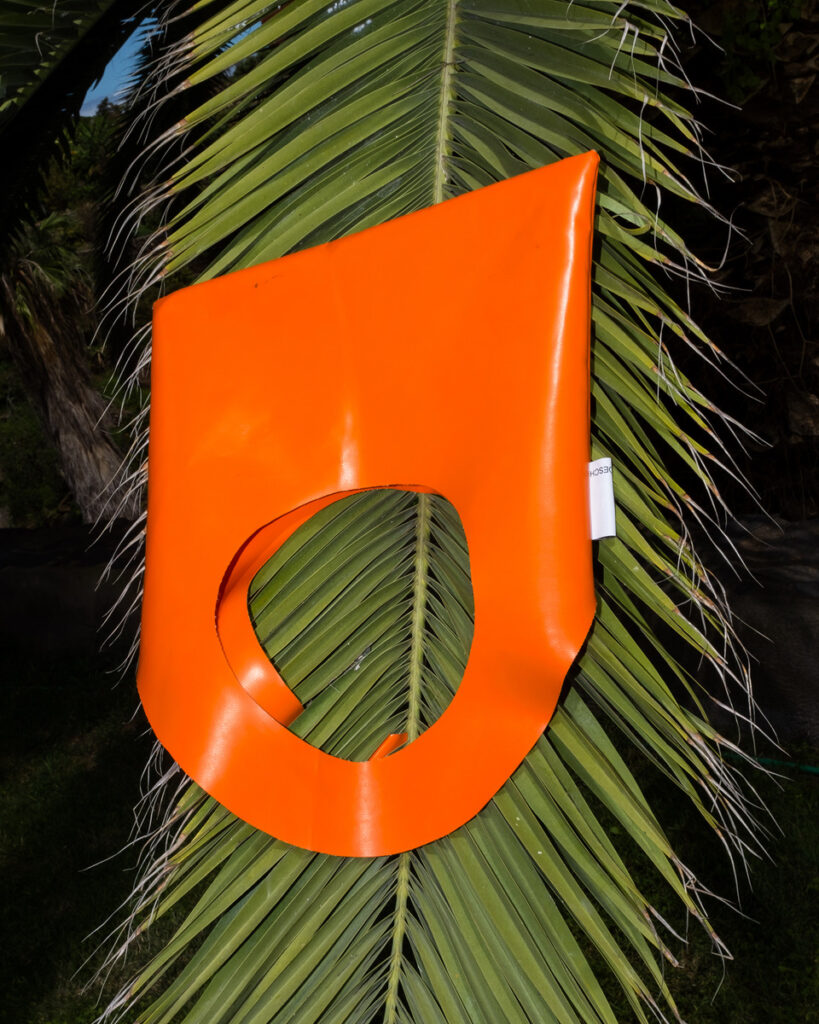
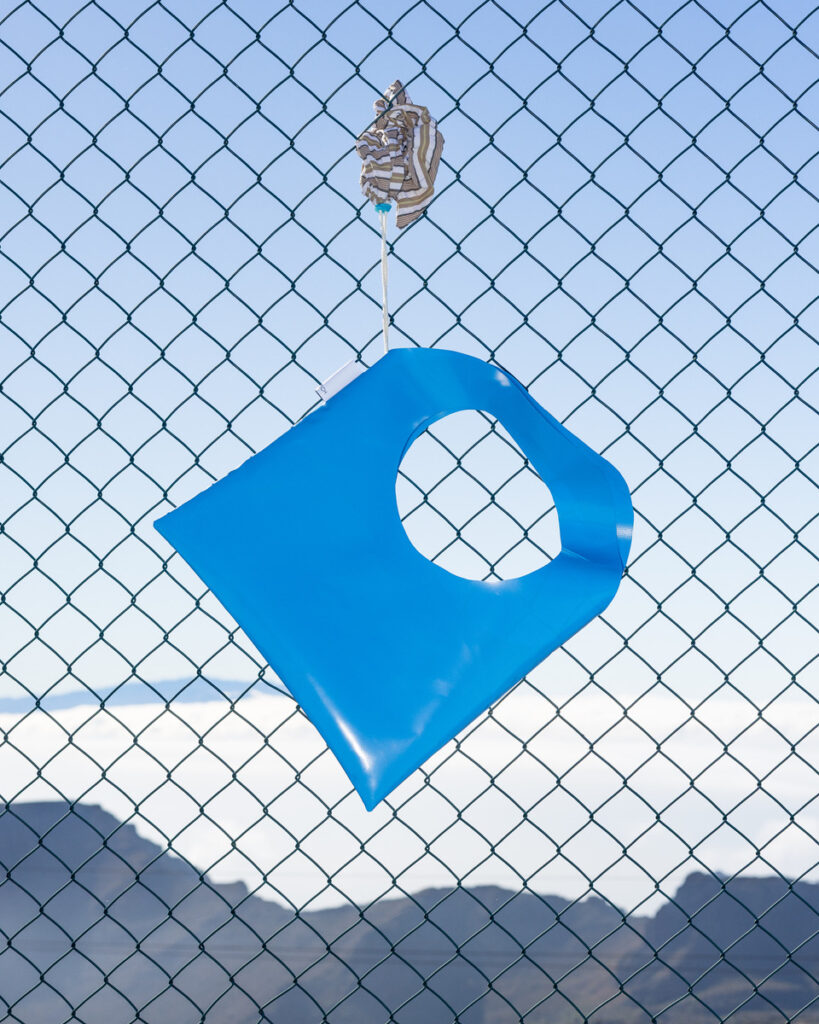
Lea Roesch is my name and the name of this brand. Everything started with a coat, a shape that fits every female body, a design that suits every woman. Conscious of the fashion world’s shortcomings i focus my work on deadstock and sustainably produced materials. I only produce limited quantities to avoid any overproduction. Every piece is made either directly in the studio in Berlin or by bag makers in Germany. The design evolves in small steps, a little change in material, the length of a sleeve. Always keeping focus on being timeless, creating pieces that are made to last.
imagecredits
ICC Frontansicht, © Berlin Partner/Eventfotografen.berlin | ICC Rolltreppen schwarz-weiß, ©Andreas Gehrke | ICC Detail Rolltreppen lila, ©Andreas Gehrke | ICC Seitenansicht, © Berlin Partner/Eventfotografen.berlin